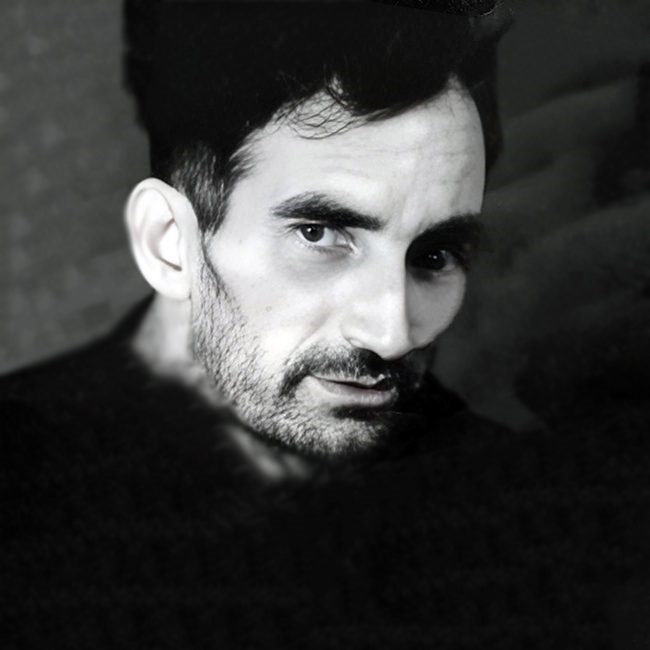
Evaluation Benvenuto Ferrazzi
Benvenuto Ferrazzi Valuations - Want to sell a Benvenuto Ferrazzi piece? Request a complimentary and confidential valuation!Colasanti Casa d'Aste will review your submission and offer a free-of-charge estimate, if your item is suitable for our auctions.
biography
Benvenuto Ferrazzi, born in Castel Madama in 1892 and died in Rome in 1969, was one of the leading figures of the Roman School in the first half of the 20th century. Son of the painter Stanislao Ferrazzi and brother of the renowned academic Ferruccio, Benvenuto grew up in an artistic environment that led him to dedicate himself to painting from an early age. At just fifteen years old, he decided to change his name from Riccardo to Benvenuto, in homage to the great Benvenuto Cellini, marking a personal and artistic turning point. He began his training by copying masterpieces in Roman museums, taking his first steps in an artistic context still tied to conservatism, but already witnessing the emergence of the first Futurist avant-garde movements with Balla, Boccioni, and Severini.
Ferrazzi quickly established himself as an eccentric and visionary figure, able to depict the "darker side" of contemporary Rome through intense and evocative painting. His constant presence at the main exhibition events in the capital for over fifty years testifies to the esteem he enjoyed among critics and collectors. Among his earliest supporters was Anton Giulio Bragaglia, who hosted five solo exhibitions of Ferrazzi’s work in the 1920s and 1930s, recognizing the value of his art. Many of his works are now preserved in prestigious institutions such as the Museum of Rome and the Galleria Comunale d’Arte Moderna, which acquired them as valuable documents of a "city that was disappearing".
His production ranges from urban landscapes to portraits and still lifes, always characterized by a strong expressive personality. His figure, long overlooked in studies on the Roman School, has recently been rediscovered thanks to retrospective exhibitions and dedicated catalogs, reaffirming his central role in the history of 20th-century Italian art.
Ferrazzi quickly established himself as an eccentric and visionary figure, able to depict the "darker side" of contemporary Rome through intense and evocative painting. His constant presence at the main exhibition events in the capital for over fifty years testifies to the esteem he enjoyed among critics and collectors. Among his earliest supporters was Anton Giulio Bragaglia, who hosted five solo exhibitions of Ferrazzi’s work in the 1920s and 1930s, recognizing the value of his art. Many of his works are now preserved in prestigious institutions such as the Museum of Rome and the Galleria Comunale d’Arte Moderna, which acquired them as valuable documents of a "city that was disappearing".
His production ranges from urban landscapes to portraits and still lifes, always characterized by a strong expressive personality. His figure, long overlooked in studies on the Roman School, has recently been rediscovered thanks to retrospective exhibitions and dedicated catalogs, reaffirming his central role in the history of 20th-century Italian art.
Past lots of Benvenuto Ferrazzi
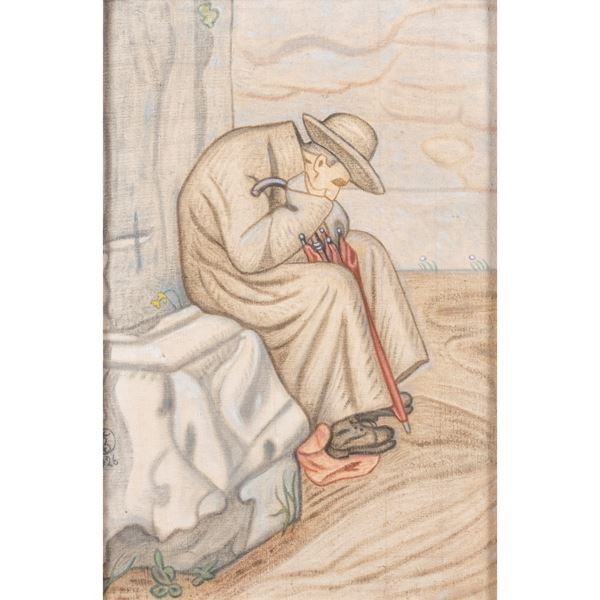
Benvenuto Ferrazzi
(Castel Madama, 1892 - Roma, 1969)
'Portrait of Antonio D'Alba'
oil on canvas, signed and dated on the left, within frame Authentication of the Benvenuto Ferrazzi Archive, dated 20 October [..]
Sold