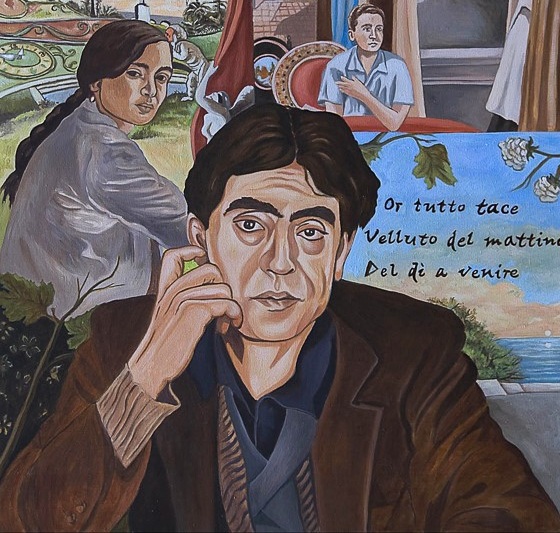
Evaluation Franco Piruca
Franco Piruca Valuations - Want to sell a Franco Piruca piece? Request a complimentary and confidential valuation!Colasanti Casa d'Aste will review your submission and offer a free-of-charge estimate, if your item is suitable for our auctions.
biography
Franco Piruca was an Italian painter born in Catania in 1937 and passed away in Rome in 2000. He initially trained in his hometown before moving to Rome in 1954, where he experienced a prolonged artistic crisis that led him to temporarily abandon painting. He resumed his work in the late 1970s, playing a central role in the revival of figurative painting, distinctly moving away from abstraction and avant-garde movements. From 1983 onwards, he participated in numerous group exhibitions curated by Maurizio Calvesi on the theme of “Anachronism.”
Piruca was recognized not only as a painter but also as a refined intellectual, known for his original theories on the role of the artist in contemporary society and the meaning of art. His works were exhibited in several Venice Biennales and are held in important European and American museums. He also taught painting at the Academy of Fine Arts in Catania.
His painting style, characterized by an imaginal realism, attracted interest abroad, including exhibitions at New York University. Franco Piruca remains a significant figure in 20th-century Italian art, contributing importantly to the reevaluation of figurative painting during a period dominated by avant-garde trends.
Piruca was recognized not only as a painter but also as a refined intellectual, known for his original theories on the role of the artist in contemporary society and the meaning of art. His works were exhibited in several Venice Biennales and are held in important European and American museums. He also taught painting at the Academy of Fine Arts in Catania.
His painting style, characterized by an imaginal realism, attracted interest abroad, including exhibitions at New York University. Franco Piruca remains a significant figure in 20th-century Italian art, contributing importantly to the reevaluation of figurative painting during a period dominated by avant-garde trends.
Past lots of Franco Piruca
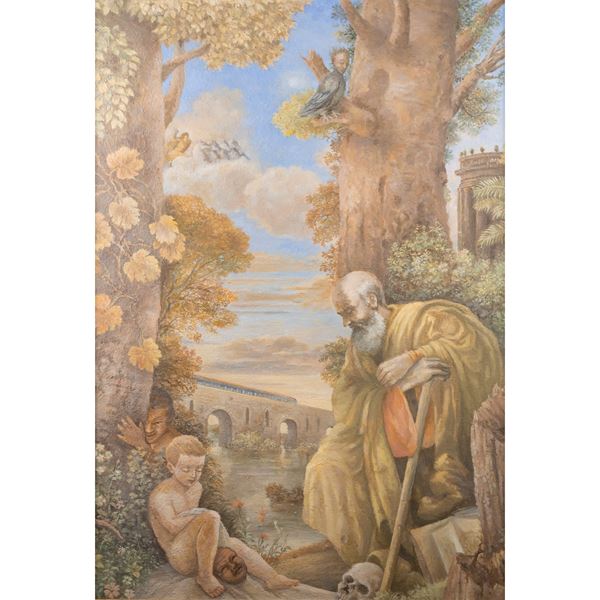
Franco Piruca
(Catania, 1937 - Roma, 2000)
"The Oracle"
oil on canvas, signed, dated and titled on the back, within frame
Provenance: Private collection, Rome
Exhibitions: Gabriele [..]